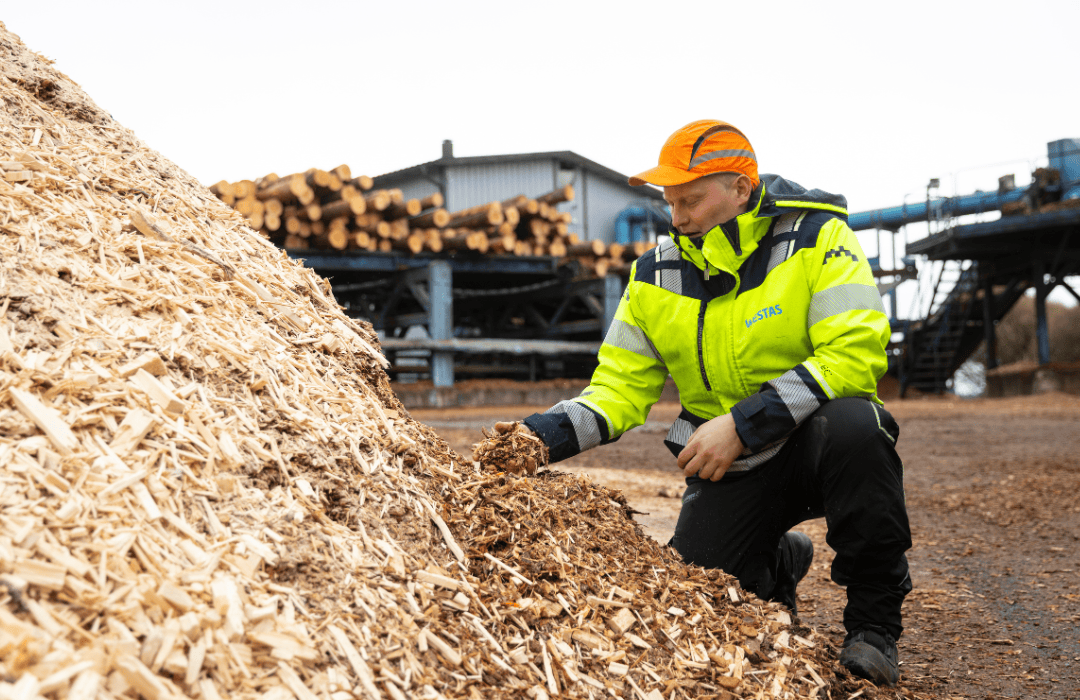
Markus Nuotio, Koski Sawmill’s kiln supervisor, took a few industrial wood drying courses when studying at Kotka Institute of Technology. When Nuotio transferred a few years ago from Westas’s dispatch to work as a kiln operator, it quickly became clear that the courses only provided a theoretical basis for drying sawn timber. The day-to-day work turned out to be very different. In addition to four progressive kilns and 20 chamber kilns, Nuotio’s field of work also includes the sawmill’s thermal power plant, which provides the heat required for drying boards and planks.
On-site heat from the sawmill’s own products
With the exception of the three-week maintenance shutdown, Koski Sawmill’s 10 MW thermal power plant runs every day of the year, around the clock. The main fuel used is the bark from the sawmill, as well as dry wood chips crushed from packaging offcuts. Approximately 10–15 m3 of fuel is consumed in an hour.
– Adding dry wood chips to the bark has improved the plant’s operation and significantly reduced interruptions caused by too much moisture, explains Nuotio.
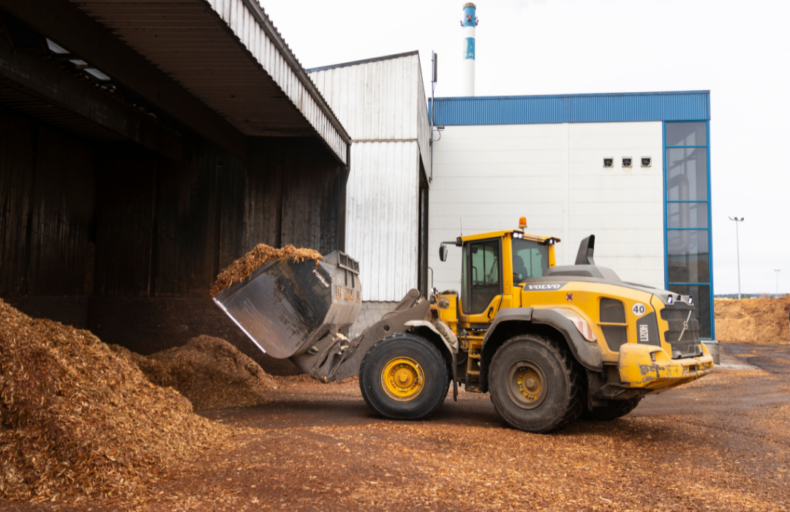
The efficiency of the equipment at the thermal power plant, completed in 2000, has been improved through flue gas recovery, for example, and its current maximum capacity is 11.5 MW. Nuotio says that the normal power demand is 7–9 MW, depending on the sawmill’s operating rate and the season.
– Of that, around 90–95 per cent is used to dry the sawn timber, and the rest is used to heat the premises, he explains.
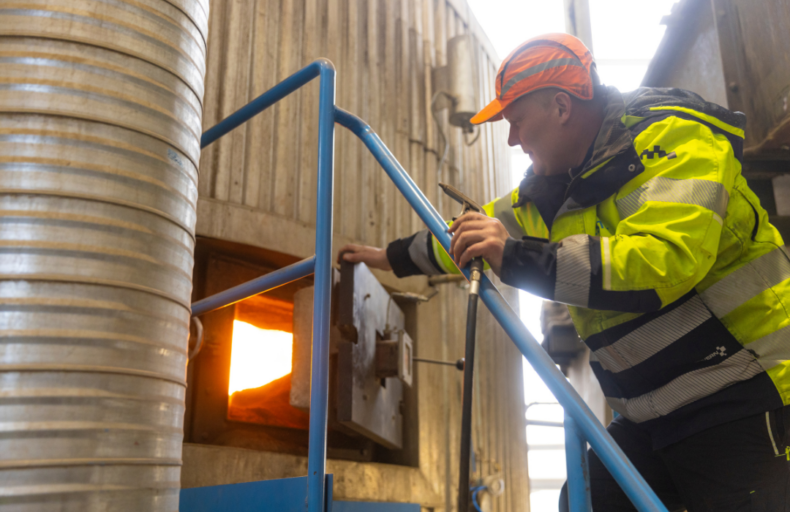
Nuotio’s tasks include the technical supervision of the plant. Although the plant functions well considering its age, ensuring that the equipment stays operational requires constant maintenance and investments. In case of equipment outages, the plant has an 8 MW oil-fired boiler.
– The boiler consumes 800 litres of oil an hour at full power, so it isn’t a very viable option. A fuel truck would have to show up once a day, Nuotio points out.
Theory, technology and gut instinct
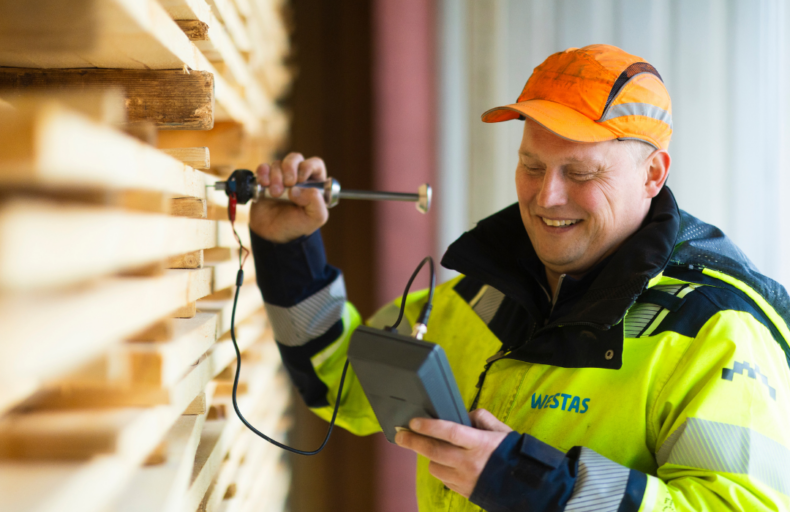
Alongside monitoring the thermal power plant, Nuotio is in charge of the kilns, whose total annual drying capacity is around 300,000 m3. The job of the kiln supervisor involves planning the sawn timber drying schedules and providing the forklift drivers and kiln personnel with instructions.
– Everything that is needed to ensure an efficient and top-quality drying result, Nuotio sums up.
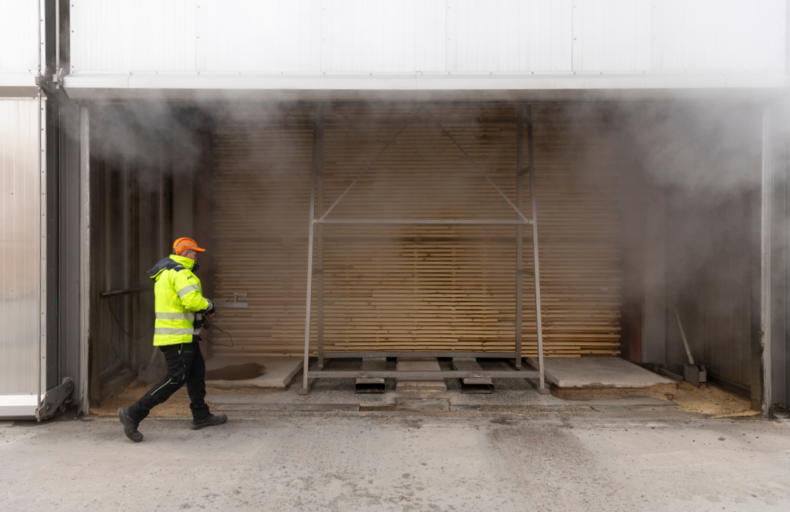
Drying times vary depending on the sawn timber’s thickness, tree species and season. While thin spruce schaalboards dry in approximately 24 hours in the summer, thick pine heartwood may have to be dried in a 70-degree air flow for as long as 10 days.
–Spring is a difficult time as the initial moisture of green timber varies. The end result should, however, be evenly dry, but not too dry so the timber doesn’t crack. The goal is a happy medium. When working with a living raw material, where each piece is different, achieving perfection is not possible on an industrial scale, Nuotio says.
The newest kilns are around five years old and represent the latest technology. Each chamber and channel is unique, however. Of the heartwood supplied by Westas, as much as 30 per cent has been special dried for each customer, so selecting the most suitable kiln for each product requires experience. According to Nuotio, that is what makes the kiln operator’s job so great.
–Drying is a work stage that requires all the senses. Luckily, we have experienced and competent personnel who take care of the thermal power plant’s operations and understand the unique features of each kiln. Just interpreting the trend curves doesn’t get us the best result for the customer, he concludes.
This article was published in Westas stakeholder magazine 2026; read the full magazine here.